Dominion deal likely to mean more power for data centers
What to know about Dominion-NextEra merger
By: By Peter Cary

Doug Stroud
The planned merger of NextEra Energy and Dominion Energy would create the largest regulated utility company in the world — a development that could have big impacts on everything from the price of electricity to the time it takes to power data centers.
The $67 billion agreement is not yet a done deal. It still needs state and federal approvals, a process estimated to take between 12 and 18 months.
But if it does move forward, one thing seems certain, analysts say. The merger would create a company with the size and capital to generate enough power — and build enough transmission infrastructure — to address the unprecedented energy demand of Virginia’s booming data center industry.
Virginia is already the data center capital of the world, but the pace of new construction has slowed due to one limiting factor: Dominion’s long wait time for power delivery, which is now four to seven years.
There were also rising doubts about whether Dominion could ever generate or deliver the huge amount of power needed by data center projects waiting in the wings. NextEra says the merged company will help meet that demand.
“The combined company’s unmatched scale and operating platform would enable us to meet electricity demand while maintaining affordability across Florida, Virginia, North Carolina and South Carolina,” NextEra CEO John Ketchum said in a conference call after the merger was announced on May 18.
“Scale matters more than ever — not for the sake of size, but because scale translates into capital and operating efficiencies,” he added.
Andrew Bischof, an analyst for Morningstar, agreed with that assessment.
“We view the transaction as allowing NextEra to accelerate its data center ambitions, which had trailed those of its regulated peers, by using Dominion’s expertise and relationships to expedite NextEra’s data center hub plans,” Bischof said of the deal.
More power generation could mean more data centers and more transmission lines overhead to serve them.
Here’s what else you need to know about the mega-electricity merger:
Dominion struggles to meet soaring demand.
Dominion Energy currently has 70 gigawatts of data center projects waiting in the wings — 10 times the energy currently used by the data centers it powers — and is receiving more power applications monthly.
In late 2025, it updated a plan to add about 20 gigawatts of new power generation — an amount equivalent to 11 Lake Anna nuclear plants — in 15 years at an estimated cost of $100 billion. But it is clear that even that would not be enough.
“They have no foreseeable way they can build that out with their existing resources,” said Chris Miller, president of the Piedmont Environmental Council, a land-conservation advocacy group that testifies frequently in Dominion Energy matters before state regulators. “That may have caused them to be receptive to an offer from a partner that might be better capitalized.”
NextEra, valued at $300 billion, is three times the size of Dominion.
Dominion shareholders benefit
Dominion Energy is regulated by the state of Virginia, but is owned by investors, including large investment firms such as The Vanguard Group Inc. and BlackRock Inc., as well as thousands of other companies and individuals.
They will get nearly one full share of NextEra stock for every share they own, a deal worth $76 per share in the $67 billion deal.
Dominion shareholders will own about one-fourth of the new company and will seat four of 14 board members. Dominion stock jumped 14.6% on the news. The new company would have the ticker symbol NEE.
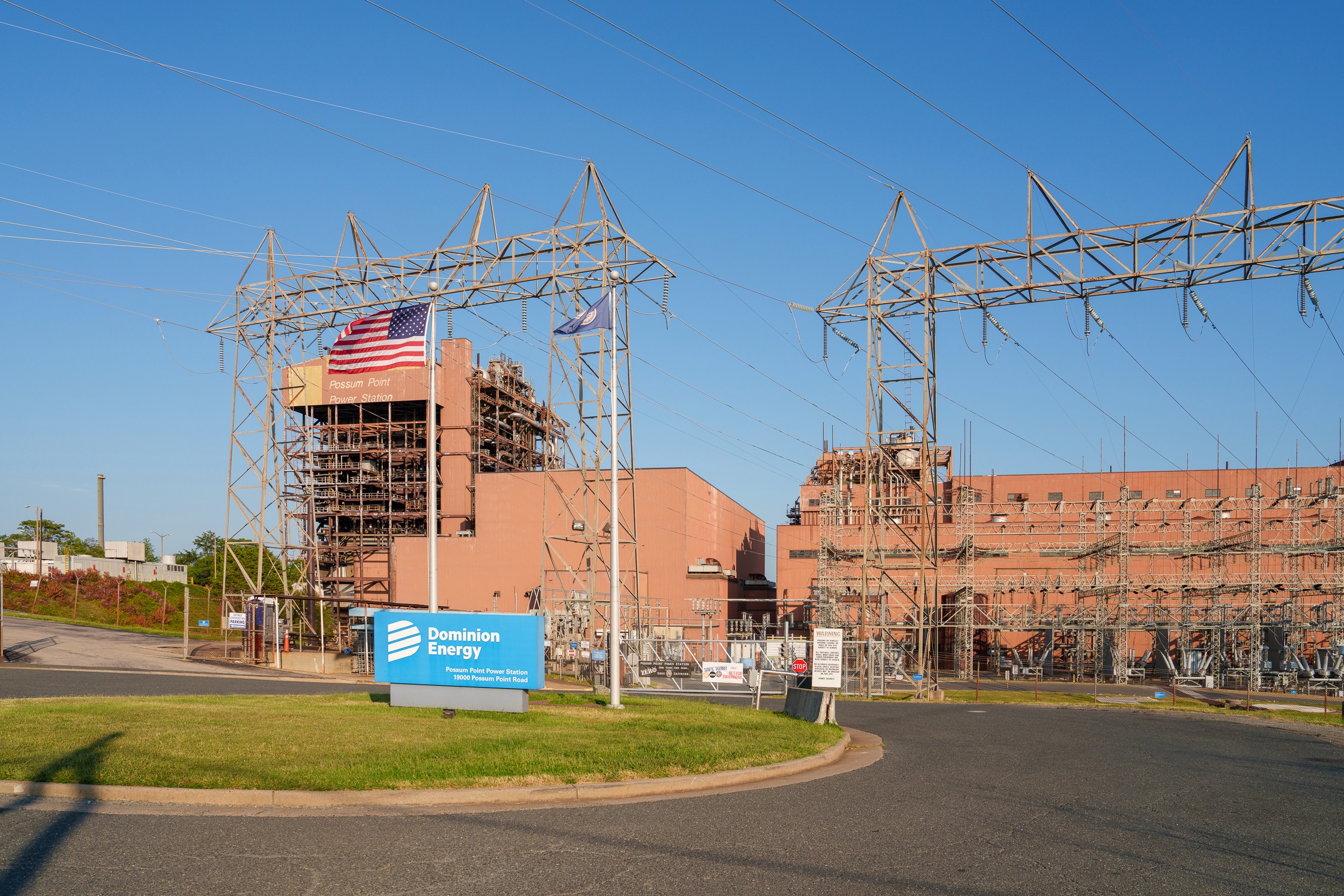
Dominion’s Possum Point power station in Dumfries has been adding generation in recent years to power data centers but it’s not enough to meet the pending demand.
NextEra sees profit in data center demand
NextEra Energy is also a publicly traded company with hundreds of thousands of shareholders, including Vanguard and BlackRock, which hold significant shares. NextEra sees the data centers lining up for power as an asset.
Utilities make money for their shareholders by building more generation and transmission infrastructure, and NextEra is allowed a 9.8% rate of return on state-regulated projects. Moreover, in an era when energy is a prime driver of the economy, it will control all the power needed for Virginia’s Data Center Alley.
Impacts on ratepayers unclear
The companies have promised Dominion customers a bill credit of $2.25 billion distributed over two years after the merger is approved. Exactly what those credits will mean for Dominion’s 3.5 million customers will be determined by Virginia’s State Corporation Commission, so it’s not yet known how this give-back will affect residential bills.
Members of electricity cooperatives, such as NOVEC, will likely not see any direct impacts from the merger, according to a NOVEC spokesman.
Whether electricity rates will go up or down as a result of the merger is not yet known. If approved, the merger will mean the two companies would provide power to about 10 million customers across Florida, Virginia, North Carolina and South Carolina. NextEra says that spreading costs among more customers will help keep bills down.
But the main driver of customer bill increases is the cost of infrastructure, and that is certain to rise as the new company spends more to serve its huge data center load.
“This merger needs to be strongly scrutinized for how it will impact energy bills,” U.S. Rep. Suhas Subramanyam, a Virginia Democrat whose district includes half of Prince William County and most of Virginia’s data center alley, said in a statement. “A company that specializes in building energy infrastructure just bought a company that likes to increase rates for new infrastructure.”
The merger still has regulatory hurdles
The merger won’t happen without the approval of several state and federal agencies, including the Federal Energy Regulatory Commission, the Nuclear Regulatory Commission, and regulators in Virginia, North Carolina and South Carolina, where Dominion operates.
Experts estimate it will take one or two years to close the deal.
Under the terms of the offer, Dominion would continue to operate in Virginia and the Carolinas as a subsidiary of the larger company.
As a result of the merger, Dominion may lose its argument to the State Corporation Commission and state legislators that it is a local company with the best interest of Virginians in mind, said Miller of the PEC.
“It could be the best opportunity to address the disproportionate influence of Dominion in state politics,” he said. “It’s finally transparent that they are not really a Virginia company; they are a capital organization interested only in their bottom line.”
Miller noted that the bigger company could spend more on political influence in Virginia than even Dominion does now. According to the Virginia Public access Project, Dominion spent $31.6 million on political donations in Richmond in the past two years.